Keynote Speaker
II
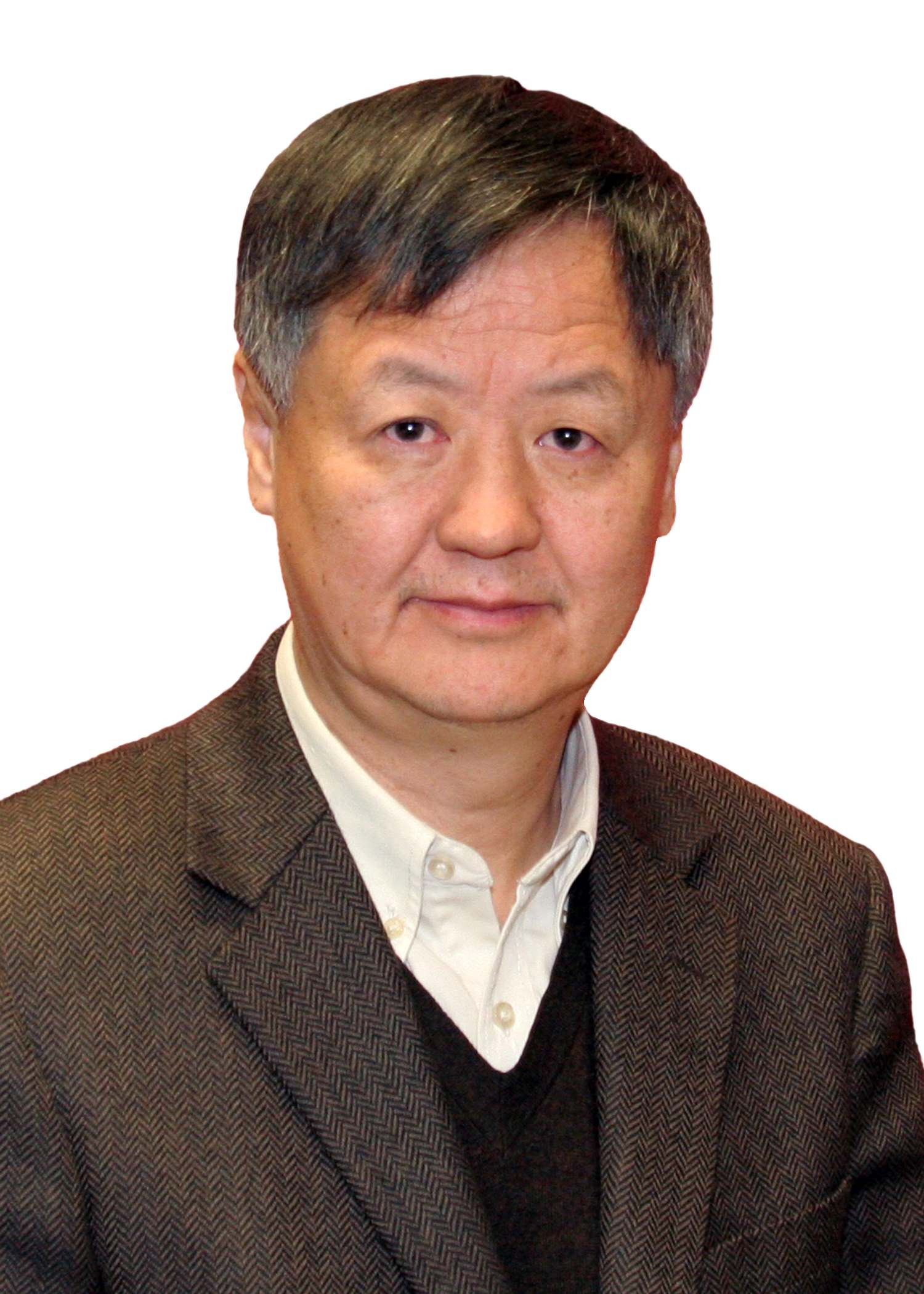
Prof. Jun Wang (IEEE Life Fellow, IAPR Fellow, and HKAE
Fellow)
City University of Hong Kong, Hong Kong
Bio:
Jun Wang is a chair
professor at City University of Hong Kong. Prior to it,
he held various academic positions at Dalian University
of Technology, Case Western Reserve University,
University of North Dakota, and the Chinese University
of Hong Kong. He also held various short-term visiting
positions at USAF Armstrong Laboratory, RIKEN Brain
Science Institute, Shanghai Jiao Tong University,
Huazhong University of Science and Technology, and
Swinburne University of Technology. He received a B.S.
and an M.S. from Dalian University of Technology and a
Ph.D. degree from Case Western Reserve University. He is
the Editor-in-Chief of the IEEE Transactions on
Artificial Intelligence and was the Editor-in-Chief of
the IEEE Transactions on Cybernetics. He is an IEEE Life
Fellow, IAPR Fellow, and HKAE Fellow, and a foreign
member of Academia Europaea. He is a recipient of the
APNNA Outstanding Achievement Award, IEEE CIS Neural
Networks Pioneer Award, CAAI Wu Wenjun AI Achievement
Award, and IEEE SMCS Norbert Wiener Award, among other
distinctions.
Speech Title:
Intelligent Information Processing via Collaborative
Neurodynamic Optimization
Speech
Abstract: The past four decades have witnessed the
emergence and growth of neurodynamic optimization, which
has become a potentially powerful problem-solving tool
for constrained optimization due to its inherent
biological plausibility and parallel, distributed
information-processing capabilities. In recent years, a
hybrid intelligence framework known as collaborative
neurodynamic optimization has been proposed to solve
challenging optimization problems, including global,
combinatorial, and mixed-integer optimization. In the
framework of collaborative neurodynamic optimization,
multiple recurrent neural networks are employed to
perform scattered search for optimal solutions from
different initial states, and a metaheuristic rule is
used to reinitialize neuronal states, thereby
repositioning the search toward global optimal
solutions. This approach has been theoretically proved
to be globally convergent and experimentally
demonstrated to be effective for many applications. In
this talk, I will present several specific paradigms in
this framework for data processing, feature selection,
supervised learning, and compressive sensing.
Keynote Speaker
III
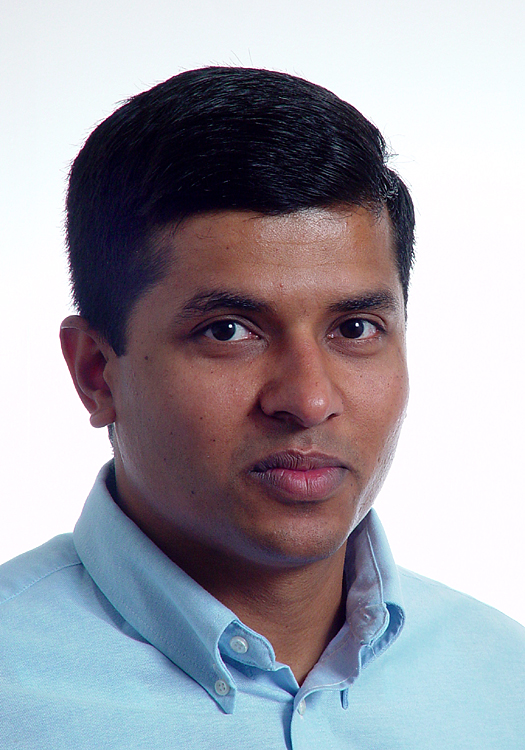
Prof. Gaurav Sharma (IEEE Fellow, SPIE fellow)
University of Rochester, USA
Bio:
Gaurav Sharma is
a professor in the Departments of Electrical and
Computer Engineering, Computer Science, and
Biostatistics and Computational Biology, and a
Distinguished Researcher in Center of Excellence in Data
Science (CoE) at the Goergen Institute for Data Science
at the University of Rochester. He received the PhD
degree in Electrical and Computer engineering from North
Carolina State University, Raleigh in 1996. From 1993
through 2003, he was with the Xerox Innovation group in
Webster, NY, most recently in the position of Principal
Scientist and Project Leader. His research interests
include data analytics, cyber physical systems, signal
and image processing, computer vision, and media
security; areas in which he has 56 patents and has
authored over 220 journal and conference publications.
He served as the Editor-in-Chief for the IEEE
Transactions on Image Processing from 2018 through 2020,
and for the Journal of Electronic Imaging from 2011
through 2015. He is a member of the IEEE Publications,
Products, and Services Board (PSPB) and chaired the IEEE
Conference Publications Committee in 2017-18. He is the
editor of the Digital Color Imaging Handbook published
by CRC press in 2003. Dr. Sharma is a fellow of the
IEEE, a fellow of SPIE, a fellow of the Society for
Imaging Science and Technology (IS&T) and has been
elected to Sigma Xi, Phi Kappa Phi, and Pi Mu Epsilon.
In recognition of his research contributions, he
received an IEEE Region I technical innovation award in
2008 and the IS&T Bowman award in 2021. Dr. Sharma
served as a 2020-2021 Distinguished Lecturer for the
IEEE Signal Processing Society.
Speech Title:
Re-invigorated 2D Barcodes: Innovations and
Applications
Speech
Abstract: Barcodes have long provided an
effective image-based interface for communication of
digital data. The traditional one-dimensional universal
product (bar)code (UPC) has now been in use for over 50
years. With the proliferation of SmartPhones and tablet
devices, these days the focus is increasingly on
two-dimensional barcodes. Quick response (QR) codes
dominate the 2D barcode application space with myriad
applications, including those in advertising and
promotion, financial transactions, and connectivity.
With the adoption of GS1 standards, 2D barcodes are also
poised to play an increasingly prominent role in product
labeling, tracking, validation, and in providing richer
information to consumers. In this talk, we highlight,
how advancements in camera, display, and print
technologies are also enabling new innovations in 2D
barcodes that can enhance their data carrying capacity
and functionality enabling new applications.
Specifically, we present a dual-modulation approach that
exploits increasing spatial resolution to increase data
capacity two-fold, in-situ and without disrupting
existing 2D barcode applications. We also highlight how
color capture, inherently available in mobile device
cameras, can be effectively used to also increase
capacity, both individually and in combination with the
dual modulation. We highlight several emerging
applications for the proposed innovations, particularly,
highlighting recent work on combating quishing, i.e., QR
code based phishing attacks.
Keynote Speaker
IV
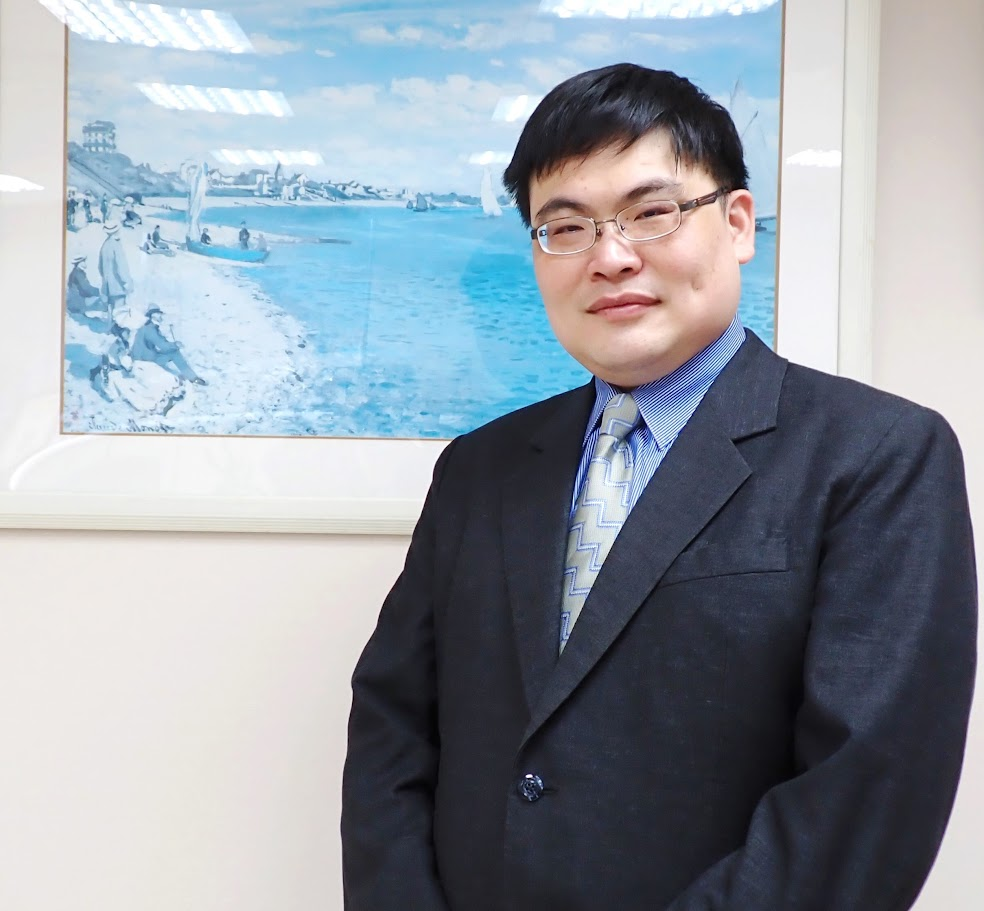
Prof. Cheng-Hsuan Li
NTCU
Bio:
Dr. Cheng-Hsuan Li
is a Chair Professor at the Graduate Institute of
Educational Information and Measurement and Director of
the Center for Institutional Affairs at National
Taichung University of Education, Taiwan. He served as
Director-General of the Department of Information and
Technology Education, Ministry of Education, Taiwan,
from August 2022 to January 2024. He assisted in the
planning and implementation of Taiwan’s Digital Learning
Enhancement Plan for Grades 1–12 Students (2022–2025)
and is currently the Principal Investigator of the
Educational Big Data Project under Taiwan’s AI Talent
Ark Project (2026–2029). In 2023, he led the development
of TALPer, a generative AI Companion embedded in the
Taiwan Adaptive Learning Platform (TALP) for nationwide
K–12 use. Since its nationwide launch, TALPer and its AI
Genies—such as self-directed learning, drawing, reading
and thinking, and joyful learning genies—have supported
over 750,000 teachers and students across Taiwan. His
research focuses on artificial intelligence in
education, statistical learning, educational
measurement, learning analytics, adaptive learning
systems, AI-supported assessment, and human-AI teaming.
He advocates trustworthy and human-centered educational
AI that supports personalized learning, teacher
decision-making, self-regulated learning, and deeper
student understanding.
Speech Title:
Designing the Next Generation of AI Learning
Environments: Multi-Agent Systems, Multimodal
Generation, and Vibe-Coded Interactive Learning
Speech
Abstract: What if an AI
learning companion could identify a student's
difficulty, generate an interactive mathematical model
on demand, and use the resulting interaction to guide
the next learning step?
This keynote explores how multi-agent systems,
multimodal generation, vibe-coded interactive learning,
and educational measurement can shape adaptive AI
learning environments. Drawing on TALPer, an AI learning
companion integrated into the Taiwan Adaptive Learning
Platform (TALP), it discusses how AI can scaffold
learning and generate manipulable mathematical models or
scientific simulations in response to specific
difficulties. Multimodal generation also supports
visual, audio, and presentation materials, while
persona-based multi-agent systems create collaborative
scenarios involving virtual students.
Beyond content generation, the keynote examines a shift
from predominantly summative assessment toward
formative, process-oriented assessment. Item Response
Theory (IRT) and Cognitive Diagnosis Models (CDMs)
provide foundations for proficiency estimation and skill
diagnosis; analyses of dialogue and interaction
processes offer complementary evidence of how
understanding develops. Together, these approaches
suggest a feedback loop connecting diagnosis, on-demand
interactive generation, learners' actions, and adaptive
guidance.
The keynote concludes with a vision of human-centered AI
environments that support exploration, collaboration,
and deeper learning while addressing assessment validity
and cognitive offloading.






 Ms.
Jassica Yao
Ms.
Jassica Yao